Safety Is Power: The World’s Most Reliable Self-Locking Nut
In modern engineering, safety, durability, and reliability are critical factors that determine the lifespan of machinery and infrastructure. One of the most common causes of mechanical failure is the loosening of bolted joints, especially in environments exposed to vibration, thermal expansion, and dynamic loads.
To address this challenge, advanced fastening solutions like the HARDLOCK® self-locking nut have been developed—offering superior performance compared to conventional fastening methods.
Why Do Nuts Loosen?
Bolted joints are constantly exposed to forces that reduce their clamping strength over time. The main causes include:
- Vibration and shock loads from rotating or moving machinery
- Thermal expansion and contraction in high-temperature environments
- Cyclic loading and fatigue stress
- Loss of preload due to external forces
When preload is reduced, gaps can form between threads, leading to loosening, damage, and ultimately failure.
This is particularly dangerous in industries such as railways, construction, mining, and energy, where even a minor failure can result in serious consequences.
The HARDLOCK® Solution
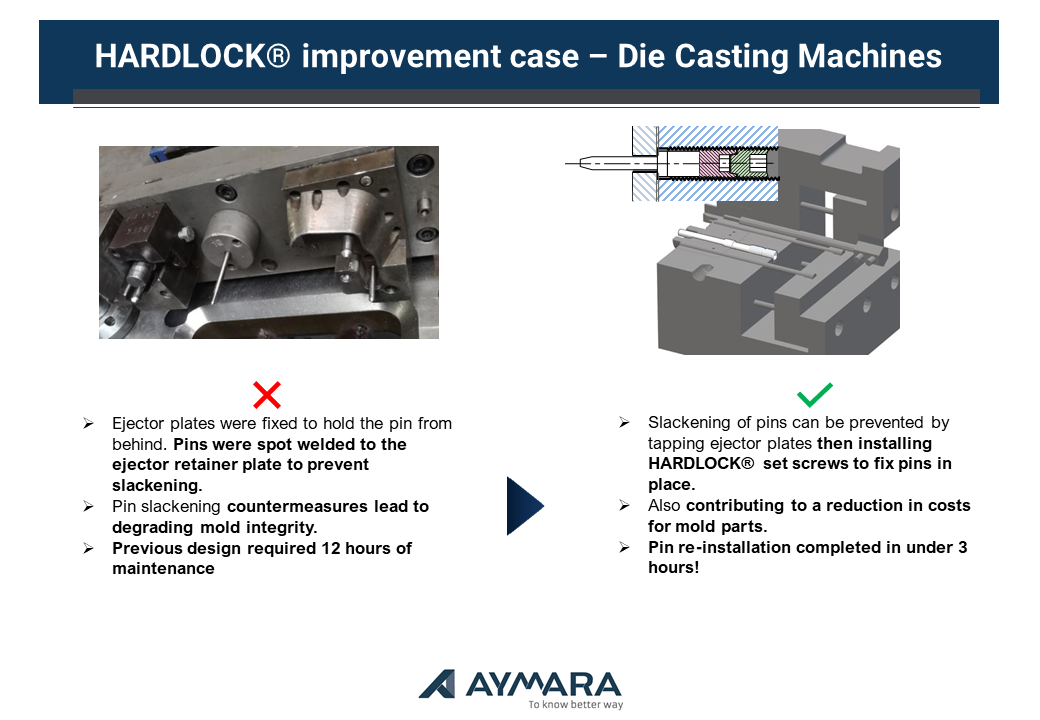
The HARDLOCK® nut is designed to eliminate loosening by using a mechanical locking system, rather than relying on friction alone.
How It Works
The system consists of two components:
- A convex nut
- A concave nut
When tightened together, these parts create a powerful wedge effect that applies radial force to the bolt. This eliminates thread clearance and prevents rotation, even under extreme conditions.
Key Advantages of HARDLOCK® Nuts
1. Exceptional Anti-Loosening Performance
Unlike standard nuts, HARDLOCK® nuts maintain preload even under intense vibration, impact, and thermal stress.
2. Long-Term Reliability
The design prevents fatigue failure, significantly extending the life of both the bolt and the joint.
3. Reusable and Cost-Effective
Made entirely of metal, the nut can be reused multiple times without losing performance, reducing maintenance costs.
4. Easy Installation
No special tools are required—installation is simple and consistent, minimizing human error.
5. Proven Strength
Testing and engineering analysis show that the locking performance can be up to 1000 times stronger than standard hex nuts.
Real-World Applications
HARDLOCK® nuts are widely used across industries where safety is critical:
- Railway systems – preventing loosening in tracks and rolling stock
- Bridges and infrastructure – ensuring structural stability
- Steel mills – handling extreme heat and expansion
- Seismic structures – maintaining integrity during earthquakes
- Power plants and heavy machinery – resisting vibration and fatigue
For example, they have been successfully used in railway systems in Japan for decades, where consistent performance under heavy loads and vibration is essential.
Why Choose Mechanical Locking Over Traditional Methods?
Traditional solutions like double nuts, adhesives, or friction-based locking systems often fail under extreme conditions. They may:
- Lose effectiveness over time
- Require frequent maintenance
- Be sensitive to installation errors
In contrast, HARDLOCK® nuts provide a fail-safe mechanical locking mechanism that does not depend on friction, ensuring stable performance throughout the product’s lifecycle.
Engineering Perspective: The Cost of Failure
In industrial environments, the failure of a single bolted joint can lead to:
- Equipment downtime
- Expensive repairs
- Safety hazards
- Production losses
By ensuring consistent preload and preventing loosening, advanced self-locking nuts significantly reduce these risks and improve operational reliability.
Conclusion
When it comes to fastening technology, safety truly is power. The HARDLOCK® self-locking nut represents a major advancement in engineering design, delivering unmatched resistance to loosening, superior durability, and long-term cost savings.
For industries where failure is not an option, choosing the right fastening solution is essential—and investing in reliable self-locking technology is a step toward safer and more efficient operations.