Safety is Power: The World’s Strongest Self-Locking Nut (HARDLOCK vs. Nord-Lock)
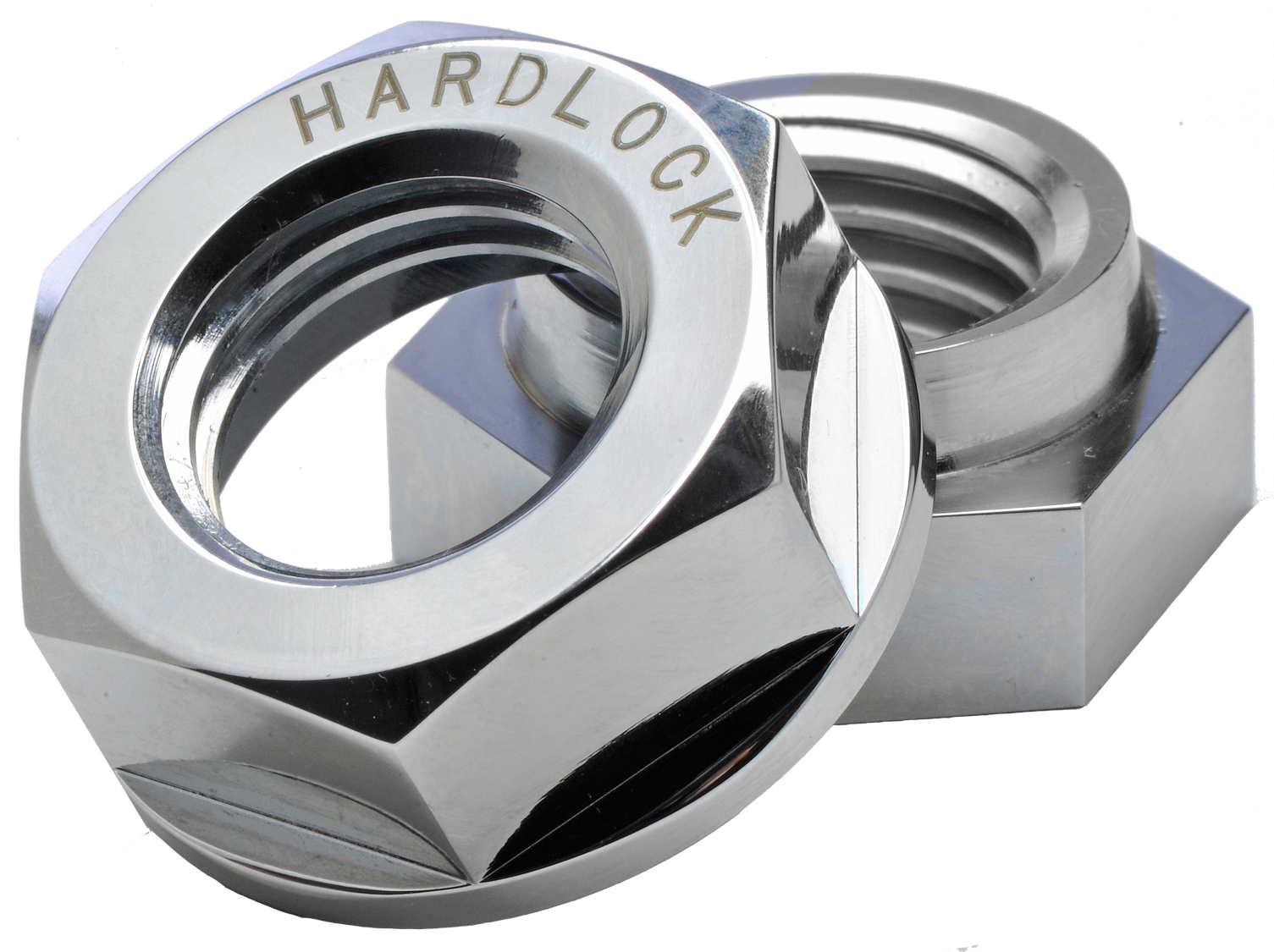
When safety, reliability, and long-term performance are critical, the choice of fastening technology becomes a decisive factor. In demanding industrial environments exposed to vibration, impact, and dynamic loads, conventional fastening methods often fail. This is where HARDLOCK® self-locking nuts offer a breakthrough solution.
Why Do Bolted Joints Loosen?
The primary cause of loosening in bolted joints is the loss of preload (clamp force) due to vibration, impact, and external forces.
Even minimal clearance between the bolt and nut threads can lead to:
- Reduced service life
- Fatigue failure
- Unexpected breakdowns
- Serious safety risks
Maintaining stable preload is therefore essential for safe and reliable operation.
HARDLOCK® Nut: A Mechanical Solution Without Compromise
The HARDLOCK® nut is based on a unique wedge-locking principle, using a pair of nuts (convex + concave) that eliminate thread clearance and generate a powerful radial locking force.
Key advantages:
- Extreme resistance to vibration and impact
- Self-locking effect up to 1000× stronger than standard nuts
- Fully metallic design (no plastic deformation or inserts)
- Reusable without performance loss
- No special tools required
- Precise torque and preload control
Unlike conventional locking systems, HARDLOCK does not rely on friction alone but creates a mechanical locking effect, ensuring long-term stability even in extreme environments.
Proven Performance in Testing (Junker Test & Real Conditions)
The effectiveness of fastening systems is commonly verified using the Junker vibration test (DIN 65151 / ISO 16130), one of the most severe standards for evaluating bolt loosening.
Independent and internal tests show that:
- HARDLOCK nuts maintain preload even under dynamic transverse loads
- Standard nuts and friction-based systems lose clamp force quickly
- HARDLOCK retains performance even after repeated reuse cycles
HARDLOCK vs. Nord-Lock Washers
Both HARDLOCK and Nord-Lock systems use the wedge principle, but their behavior differs in practice.
Nord-Lock washers:
- Work by securing tension rather than friction
- Proven in Junker tests to maintain preload
- May affect the bearing surface due to serrations
HARDLOCK nuts:
- Use a double-nut wedge mechanism without damaging surfaces
- Provide equivalent or superior locking performance in vibration tests
- Integrate directly into the nut design (no additional components needed)
👉 In practical comparison tests (including vibration demonstrations like the referenced YouTube video), HARDLOCK shows zero loosening behavior, while conventional systems may gradually lose preload under cyclic loads.
Real-World Applications
HARDLOCK® nuts are widely used in industries where loosening cannot be tolerated:
- Power plants and energy systems
- Railways and transportation
- Mining and heavy machinery
- Bridges and infrastructure
- Solar panel mounting systems exposed to wind loads
In all these applications, maintaining preload prevents:
- Structural instability
- Fatigue cracking
- Costly downtime
Engineering Insight: Why Mechanical Locking Wins
Traditional fastening solutions rely on:
- Friction
- Deformation
- Additional components
These approaches degrade over time.
HARDLOCK provides:
- Permanent mechanical locking
- Stability independent of friction conditions
- Reduced maintenance and inspection needs
This leads to lower total cost of ownership and higher operational safety.
Conclusion
If your application involves vibration, dynamic loads, or safety-critical joints, choosing the right fastening system is essential.
HARDLOCK® nuts deliver unmatched reliability by eliminating thread play and maintaining preload under the most extreme conditions.
Safety is not optional — Safety is Power.