Safety is Power: The World’s Strongest Self-Locking Nut for Railway Steel Beam Trusses
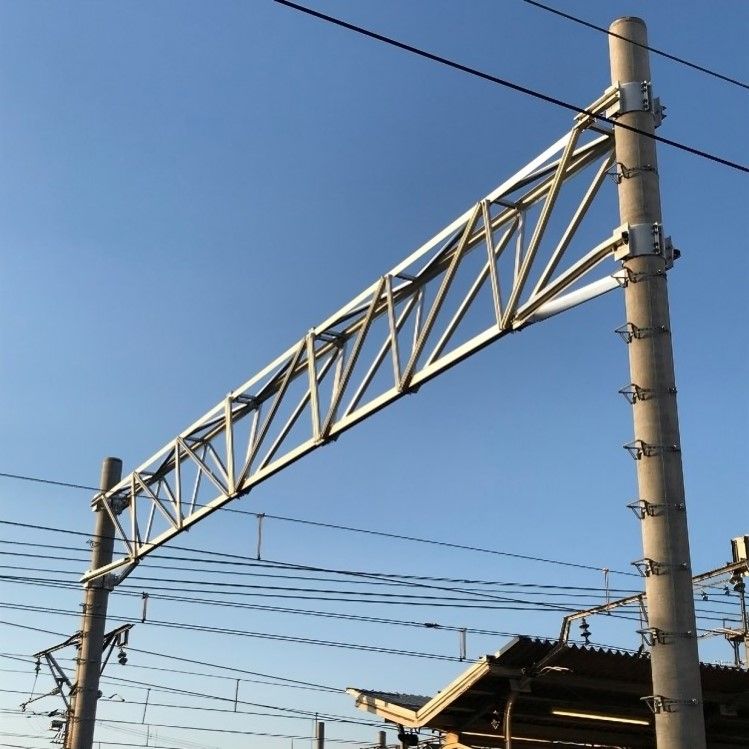
In modern railway infrastructure, safety, durability, and maintenance efficiency are critical factors. One of the most challenging issues in bolted connections—especially in railway steel beam trusses—is loosening caused by vibration, dynamic loads, and cyclic stress.
The solution lies in advanced fastening technology: the HARDLOCK® self-locking nut, engineered to provide unmatched resistance to loosening while maintaining long-term structural integrity.
The Challenge: Loosening in Railway Steel Structures
Railway steel beam trusses are continuously exposed to:
- Dynamic loads from passing trains
- Vibrations and impact forces
- Thermal expansion and contraction
- Long-term fatigue stress
These conditions can cause a loss of clamp force in conventional bolted joints, leading to progressive loosening. Over time, this may result in:
- Structural instability
- Increased maintenance costs
- Safety risks and potential failures
The primary cause of loosening is the reduction of initial preload due to vibration and external forces, which creates microscopic gaps between threads and allows rotation of the nut.
The HARDLOCK® Solution
The HARDLOCK® nut uses a unique wedge-locking principle that eliminates clearance between the bolt and nut threads. This creates a powerful frictional force that prevents rotation—even under extreme vibration.
Key characteristics include:
- Self-locking performance up to 1000× stronger than standard hex nuts
- Maintains clamp force under severe vibration and impact
- Fully metallic design (no nylon inserts → no degradation over time)
- Reusable without significant loss of performance
- No special tools required for installation
Unlike prevailing torque nuts, which rely on thread deformation and lose effectiveness after repeated use, HARDLOCK® nuts provide consistent and reliable locking performance over time.
Application in Railway Steel Beam Trusses
In railway bridge and truss systems, bolted joints must withstand constant movement and stress. Traditional fastening methods often fail due to:
- Relaxation of tension
- Micro-movements in joints
- Long-term vibration exposure
HARDLOCK® nuts are specifically suited for these applications because they:
- Prevent loosening even under continuous dynamic loads
- Maintain structural integrity without frequent retightening
- Reduce maintenance intervals and lifecycle costs
In similar railway applications—such as fastening sleepers on bridge structures—HARDLOCK® nuts have been successfully used for decades to prevent loosening caused by movement and vibration.
Proven Reliability in Demanding Environments
HARDLOCK® technology has been widely adopted in critical infrastructure and transportation systems, including high-speed rail.
For example:
- Used across all modern Shinkansen (bullet train) systems
- Approximately 20,000 sets per train
- Zero reported failures since 1992
This track record demonstrates exceptional reliability in environments where failure is not an option.
Advantages for Engineers and Infrastructure Projects
For railway engineers and designers, HARDLOCK® nuts offer:
- Fail-safe fastening performance in high-vibration environments
- Long-term durability with minimal maintenance
- Compatibility with standard bolts and tools
- Flexibility in materials and surface treatments
By eliminating loosening at the source, they contribute to:
- Increased safety
- Reduced operational downtime
- Lower total cost of ownership
Conclusion
In railway steel beam trusses, where safety and reliability are paramount, conventional fastening methods often fall short. The HARDLOCK® self-locking nut provides a proven, high-performance solution that ensures joints remain secure under even the most demanding conditions.
Safety is power—and with HARDLOCK®, safety is guaranteed.