Safety is Power: The World’s Most Reliable Self-Locking Nut
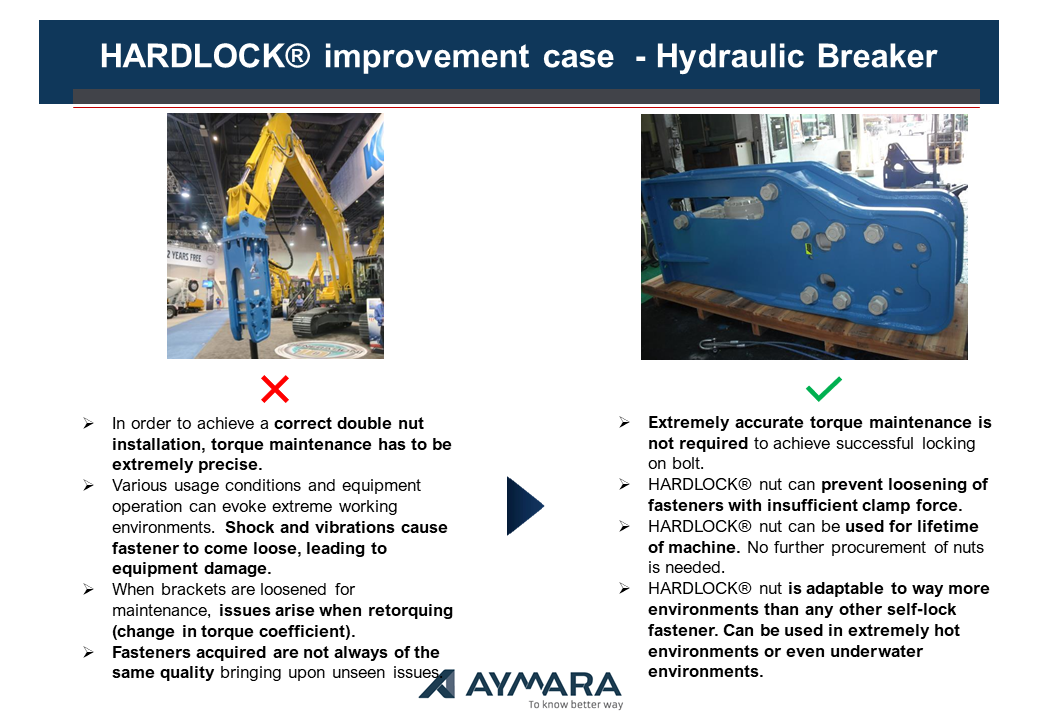
In modern engineering, fastener reliability is critical. From heavy industrial machinery to large-scale infrastructure, even a single loose bolt can lead to costly failures—or worse, serious safety risks. This is why advanced fastening technologies like the HARDLOCK® nut are redefining what it means to secure bolted joints.
Why Do Conventional Nuts Fail?
In real-world environments, bolted connections are constantly exposed to:
- Vibrations
- Impact forces
- Temperature fluctuations
- Dynamic loads
These factors gradually reduce the initial clamp force of a bolt. As a result, tiny gaps form between the threads, causing the nut to loosen over time. This process not only shortens the lifespan of components but can also lead to fatigue failure and catastrophic breakdowns.
Traditional solutions—such as nylon insert nuts or prevailing torque nuts—often struggle under extreme conditions. They may degrade, require higher installation force, or lose effectiveness when exposed to heat or coatings like hot-dip galvanization.
The HARDLOCK® Solution
The HARDLOCK® nut introduces a fundamentally different approach to fastening. Instead of relying on friction or deformation, it uses a mechanical wedge principle that eliminates any clearance between the bolt and nut threads.
This design ensures:
- Zero loosening under vibration or shock
- Consistent clamping force over time
- Superior resistance to dynamic loads
In fact, its self-locking performance has been shown to be up to 1000 times stronger than standard hex nuts, delivering a level of security comparable to welding or adhesive bonding.
Key Advantages of HARDLOCK® Nuts
1. Fail-Safe Performance in Extreme Conditions
The unique locking mechanism prevents any movement within the threaded connection, making it highly resistant to vibrations from any direction.
2. Fully Metallic and Durable
Unlike nylon-based locking nuts, HARDLOCK® nuts are made entirely of metal. This means:
- No degradation over time
- High resistance to heat and harsh environments
- Long-term reliability
3. Reusable Without Performance Loss
Because the locking mechanism does not rely on plastic deformation, the nut can be reused multiple times with minimal reduction in performance.
4. Precise Torque Control
The system allows accurate tightening using standard torque methods, ensuring the desired clamp force is achieved—even in demanding applications.
5. Easy Installation
No special tools are required. Standard equipment such as a wrench or torque wrench is sufficient.
6. Material Versatility
HARDLOCK® nuts are available in a wide range of materials, including:
- Stainless steel
- Alloy steel
- Titanium
- Brass
- Specialized polymers
This flexibility makes them suitable for various industries and environments.
Proven Performance in Critical Applications
HARDLOCK® technology is trusted worldwide in high-risk and high-performance environments, including:
- High-speed rail systems (with zero failure records since 1992)
- Structural components requiring 100-year durability, such as the Tokyo Skytree
- Heavy industrial equipment exposed to extreme vibration and thermal stress
In industries like steel manufacturing, where constant expansion and contraction weaken traditional fasteners, HARDLOCK® nuts prevent loosening entirely—eliminating the need for repeated maintenance.
Engineering Innovation Backed by Patents
With nearly 200 patented innovations, HARDLOCK® technology represents one of the most advanced fastening solutions available today. Its ability to maintain preload and prevent loosening significantly reduces the risk of bolt fatigue and system failure.
Conclusion
When it comes to safety-critical applications, not all fastening solutions are equal. The HARDLOCK® nut offers a proven, high-performance alternative to traditional locking methods by eliminating the root causes of loosening.
Whether used in infrastructure, transportation, or heavy industry, it delivers:
- Maximum reliability
- Reduced maintenance
- Long-term cost savings
In engineering, safety is power—and secure fastening is the foundation of both.