Safety Is Power: Why the World’s Strongest Self-Locking Nut Matters
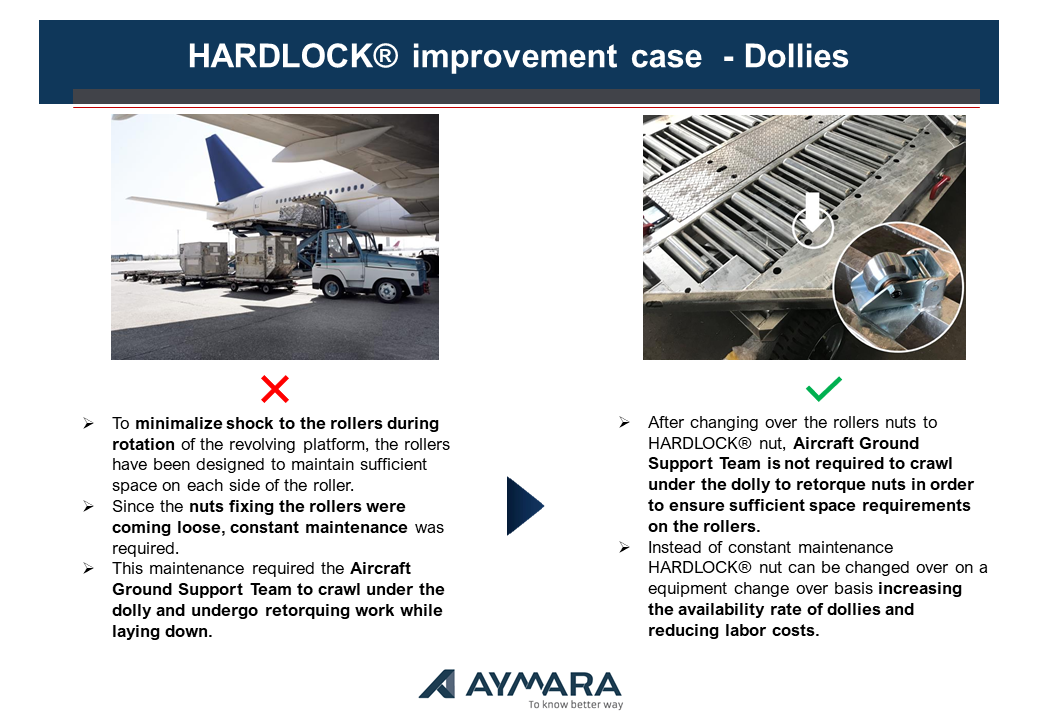
In modern engineering, safety, reliability, and efficiency are non-negotiable. Across industries such as transportation, energy, and heavy machinery, even a minor failure in fastening systems can lead to costly downtime—or worse, catastrophic consequences.
That’s why advanced fastening solutions like the HARDLOCK® self-locking nut are redefining how engineers approach bolted joint security.
The Challenge: Preventing Bolt Loosening
Traditional fastening methods—such as nylon insert nuts or metal cone locknuts—belong to the category of prevailing torque nuts. These rely on friction created by deformed threads to resist loosening.
However, this approach has several drawbacks:
- Resistance torque decreases with reuse (often by up to 50%)
- Performance depends heavily on thread deformation
- Limited resistance to vibration and dynamic loads
- Increased installation difficulty due to higher torque requirements
In high-vibration environments, these limitations can compromise safety and lead to frequent maintenance.
A Smarter Solution: HARDLOCK® Self-Locking Technology
Unlike conventional locknuts, the HARDLOCK® nut uses a mechanical wedge-locking principle that activates only after installation. This design delivers a powerful and reliable anti-loosening effect without relying on thread deformation.
Key advantages include:
- Zero loosening under extreme vibration
- Reusable without performance loss
- Free-spinning installation (easy handling)
- Compliance with standard nut specifications (DIN 934 / ISO 4032)
This makes it a superior alternative for applications where reliability is critical.
Proven Performance in Demanding Applications
High-Speed Rail (Shinkansen)
One of the most compelling real-world examples comes from Japan’s high-speed rail system.
Before 1992, underfloor components of Shinkansen trains were welded, making maintenance difficult after long-term operation. With the introduction of newer train models, HARDLOCK® nuts replaced welding to simplify maintenance and improve safety.
Key results:
- Used across all domestic Shinkansen trains since 1992
- Approximately 20,000 HARDLOCK® nut sets per train
- Zero reported failures over decades of operation
This demonstrates unmatched reliability in one of the world’s most safety-critical transportation systems.
Extreme Testing Conditions
HARDLOCK® nuts have also been tested in highly demanding environments, including:
- Cryogenic temperatures down to -196°C
- High-load structural testing
- Severe vibration (Junker testing)
Results showed:
- No loosening or rotation
- No thread damage or galling
- No structural failure under load
These results confirm the nut’s ability to perform under extreme industrial conditions.
Industrial and Energy Applications
From power plants to heavy machinery, bolted joints are constantly exposed to:
- Thermal expansion
- Mechanical stress
- Continuous vibration
Traditional fastening methods often require frequent retightening. HARDLOCK® nuts eliminate this need by maintaining preload and preventing rotational loosening, improving long-term operational reliability.
Why It Matters: Safety, Cost, and Reliability
Using advanced self-locking nuts is not just about performance—it’s about risk reduction and cost efficiency.
Benefits for Engineers and Operators:
- Reduced maintenance and downtime
- Increased lifespan of bolted joints
- Improved operational safety
- Lower total cost of ownership
In critical industries, these benefits can translate into significant financial and safety advantages.
Conclusion
The evolution of fastening technology shows that traditional solutions are no longer sufficient for today’s demanding environments. The HARDLOCK® self-locking nut provides a fail-safe, reusable, and vibration-resistant solution that has been proven across some of the most challenging applications worldwide.
When safety truly matters, the right fastening system makes all the difference.