Safety Is Power: The World’s Strongest Self-Locking Nut
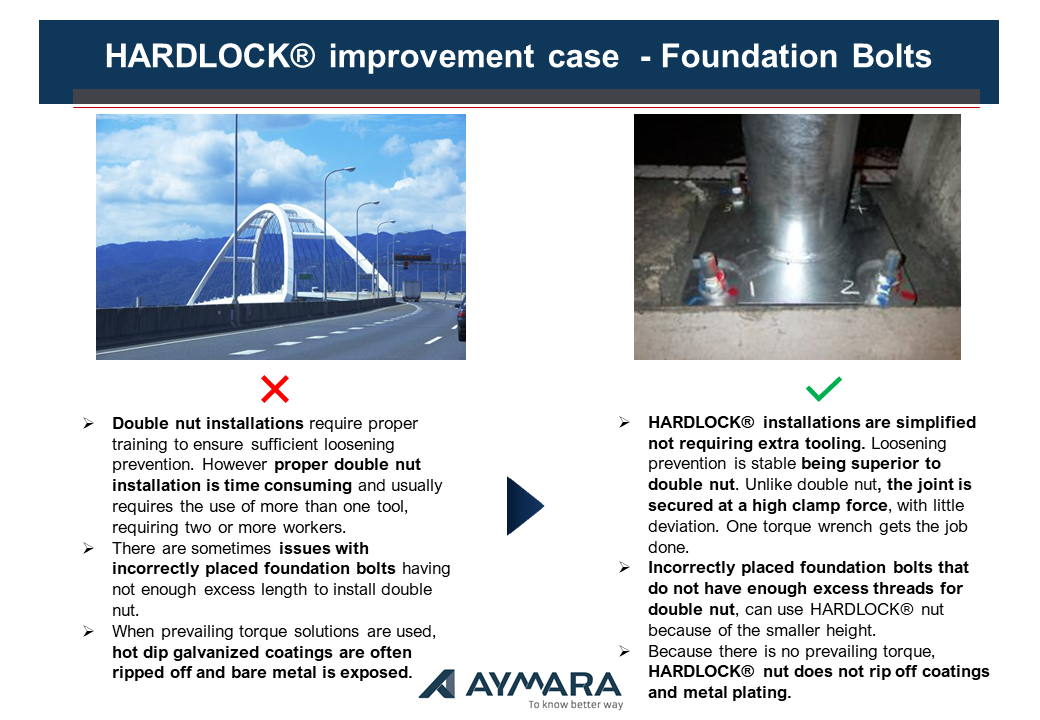
In modern engineering and industrial applications, safety and reliability are critical. From heavy machinery to renewable energy systems, even the smallest component—like a nut—can determine the success or failure of an entire structure. One of the most common challenges engineers face is loosening of bolted joints caused by vibration, impact, and dynamic loads.
This is where advanced fastening solutions such as the HARDLOCK® self-locking nut come into play.
Why Do Conventional Nuts Fail?
Traditional fastening systems often struggle in demanding environments. External forces—especially vibrations and repeated stress cycles—gradually reduce clamp force, leading to loosening.
This can result in:
- Equipment failure
- Increased maintenance costs
- Safety risks and potential accidents
- Shortened lifespan of machinery
In critical industries like mining, transportation, and energy, even minor loosening can escalate into major failures.
The HARDLOCK® Solution: Eliminating Loosening
The HARDLOCK® nut is engineered to completely eliminate loosening through a unique wedge-locking mechanism inspired by traditional Japanese engineering principles.
Unlike standard nuts, it uses a two-piece design:
- A convex nut with an off-center protrusion
- A concave nut with a matching recess
When tightened together, these components create a powerful perpendicular locking force that removes any gap between threads and secures the joint permanently.
Key Benefits of HARDLOCK® Nuts
1. Extreme Resistance to Vibration
The wedge mechanism ensures there is no clearance between threads, making the joint highly resistant to vibration, shock, and dynamic loads.
2. Fail-Safe Performance
Even in harsh environments—such as mining, railways, or heavy machinery—the nut maintains its locking force and prevents fatigue failure.
3. Reusability Without Performance Loss
Unlike conventional lock nuts that rely on deformation, HARDLOCK® nuts are fully metallic and can be reused multiple times without losing effectiveness.
4. Precise Torque Control
The system allows accurate control of axial force through torque, ensuring optimal clamping performance in any application.
5. Easy Installation
No special tools are required—standard tools such as torque wrenches or impact wrenches are sufficient.
6. Wide Material Compatibility
HARDLOCK® nuts can be manufactured from various materials, including:
- Stainless steel
- Alloy steel
- Titanium
- Brass
- Specialized coatings for corrosion resistance
Proven Performance in Extreme Conditions
HARDLOCK® nuts have been tested under severe conditions, including:
- Cryogenic temperatures down to –196°C
- High-load proof testing
- Junker vibration tests
Results showed:
- No loosening or rotation
- No thread damage or fracture
- No galling on contact surfaces
These results demonstrate reliability even in the most demanding environments.
Real-World Applications
Thanks to their durability and safety, HARDLOCK® nuts are used across a wide range of industries:
- Industrial machinery
- Mining and heavy equipment
- Railway systems and infrastructure
- Bridges and highways
- Renewable energy systems (e.g., solar panels, wind turbines)
- Automotive and transport sectors
For example, in solar installations, where wind loads can loosen connections over time, HARDLOCK® nuts significantly increase joint reliability and reduce maintenance requirements.
Cost Efficiency Through Reliability
While initial costs may be higher than standard nuts, HARDLOCK® delivers long-term savings by:
- Eliminating maintenance needs
- Reducing downtime
- Preventing equipment failure
- Extending service life
This makes it a highly cost-effective solution over the lifecycle of any project.
Conclusion
In environments where failure is not an option, choosing the right fastening technology is essential. HARDLOCK® nuts provide a proven, high-performance solution that ensures joints remain secure under even the most extreme conditions.
Safety truly is power—and with the right fastening system, it becomes a guarantee.